


Aion & Interpreting: How Many Interpreters Do I Need for a Conference?
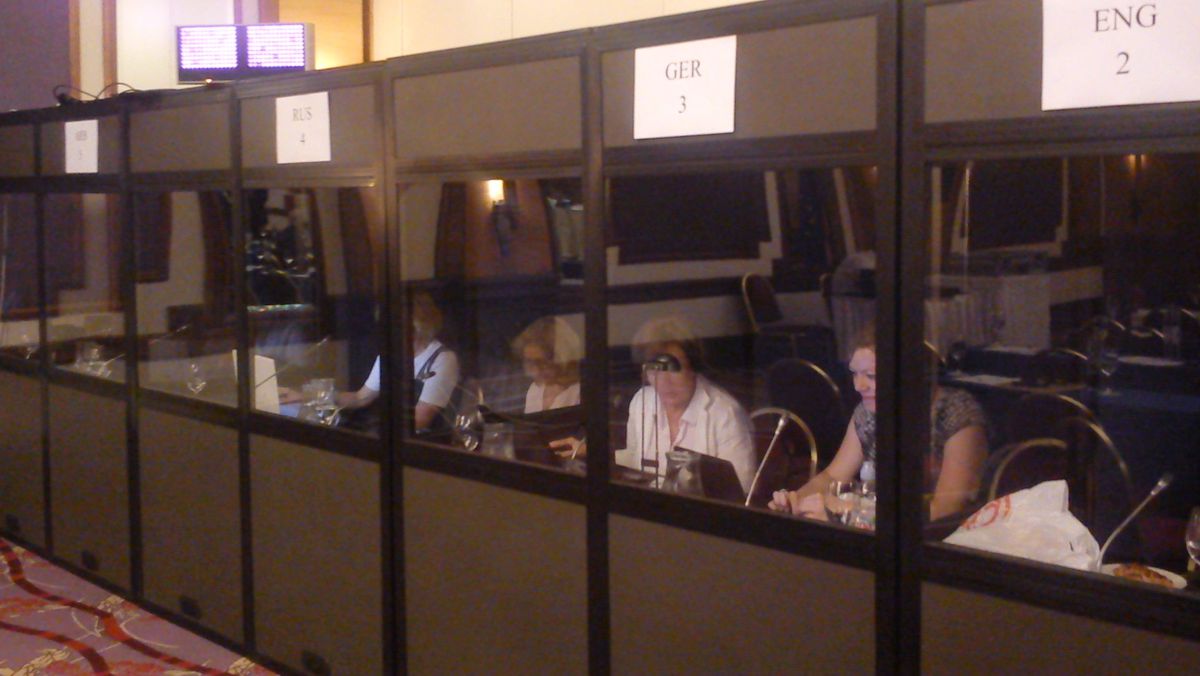
It's a fair question — but the answer involves something most clients haven't considered: interpreters are human, and like all humans, they have limits. Over time, professional standards have evolved specifically to protect their health and maintain quality throughout your event.
Two interpreters as a rule, three for demanding topics
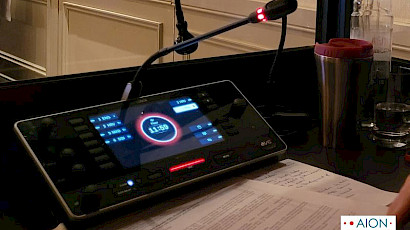
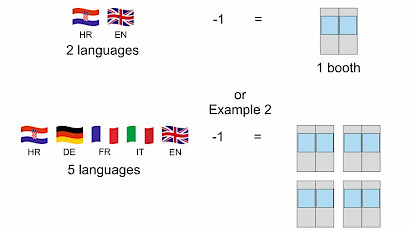
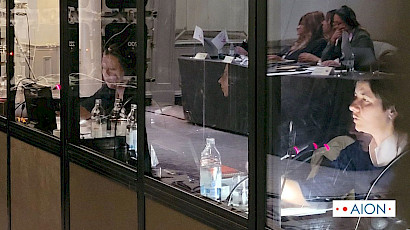
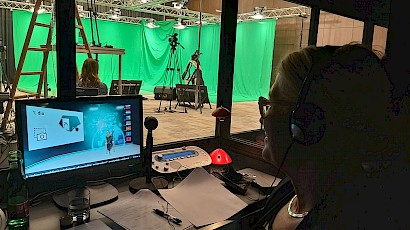
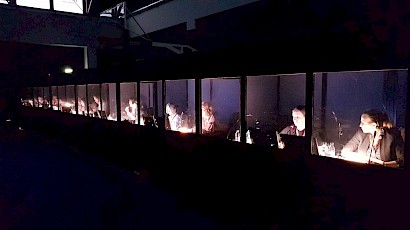
Interpreters work in pairs as standard practice. The most demanding conferences — dense technical content, fast speakers, multiple languages — require three. This is why professional interpretation booths are modular, built with two or three seats.
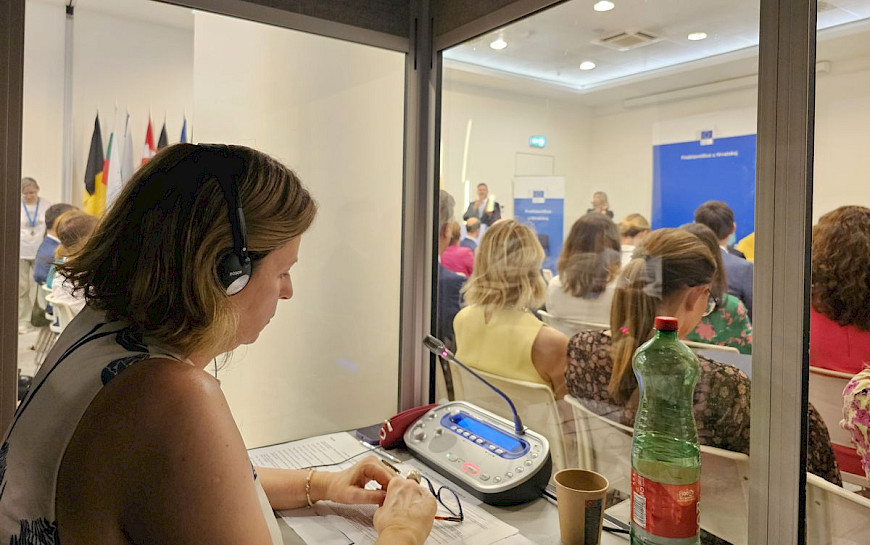
The typical working interval for one interpreter is around 20 minutes, though this varies depending on the complexity of the topic, the experience of the interpreters, and their own internal agreement. The widely accepted absolute maximum for solo interpreting is 45 minutes — roughly the threshold of sustained human concentration.
Why one interpreter for a full day is a risk
One interpreter can technically work alone all day. But consider what you're risking. You've invested significant time and resources into organising your event. Do you want its quality to depend on a single person, fully exhausted by mid-afternoon? And there's a simpler, more practical point: at some moment during the day, they will need to use the bathroom — with nobody to replace them.
Working hours and billing intervals
Conference interpreting is billed in standard intervals: 4 hours and 8 hours, both inclusive of coffee breaks and lunch breaks. A conference running from 9 a.m. to 5 p.m. counts as a standard 8-hour day for interpreters.
Water, ventilation and the small details that matter
If you've attended a conference with a booth, you've probably noticed that interpreters always have water on their desks. Speaking continuously throughout the working day puts significant strain on the throat and vocal cords, and interpreters hydrate constantly to prevent fatigue and dryness. It's standard practice — and expected — for conference organisers to provide generous amounts of water.
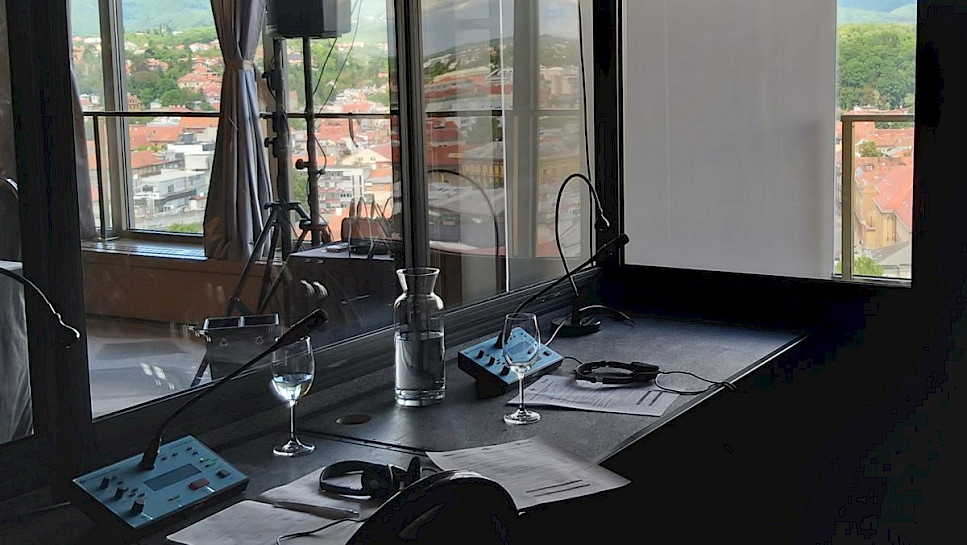
The booth itself presents another challenge: it's a small, confined space that accumulates CO2 quickly, particularly when speakers talk fast. Modern booths address this with two ventilators, but even so, interpreters occasionally need to step out briefly for fresh air. You might even notice the non-working interpreter quietly fanning the booth door — a small but effective trick to speed up ventilation for their colleague.
► Explore more conference know-how articles:
I need four languages for the conference, but how many interpreting booths?
How Conference Interpreters Prepare — and What Clients Can Do to Help
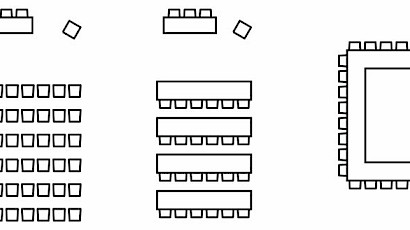
Cinema, School, or Round Table? How Your Seating Choice Shapes the Whole Conference