


Aion & Conferences: Cinema, School, or Round Table? How Your Seating Choice Shapes the Whole Conference
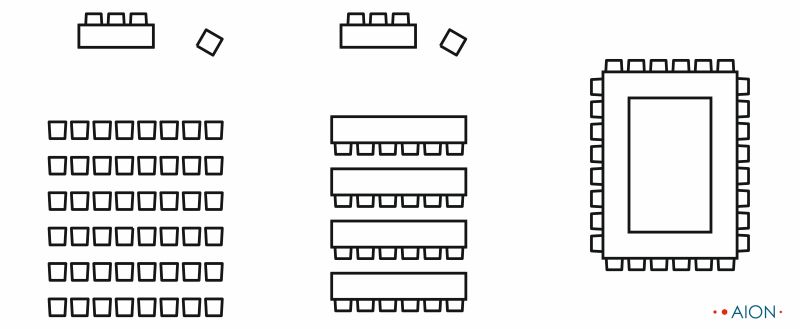
Shown in the layout above, from left to right: Cinema setup, School setup, Round table setup
Cinema — ideal for presentations, keynotes, and large-audience events (in layout: rows of chairs facing a presiding table/lectern at the front).
School — perfect for training sessions, workshops, and interactive lectures (in layout: rows of tables with chairs, facing a presiding area at the front).
Round table — best for discussions, panels, and collaborative meetings (in layout: rectangular table with chairs all around).
Cinema Setup
The most straightforward of the three, and the one everyone instinctively understands. Rows of chairs, no tables, all facing the front. Just like a theatre or — as the name suggests — a cinema.
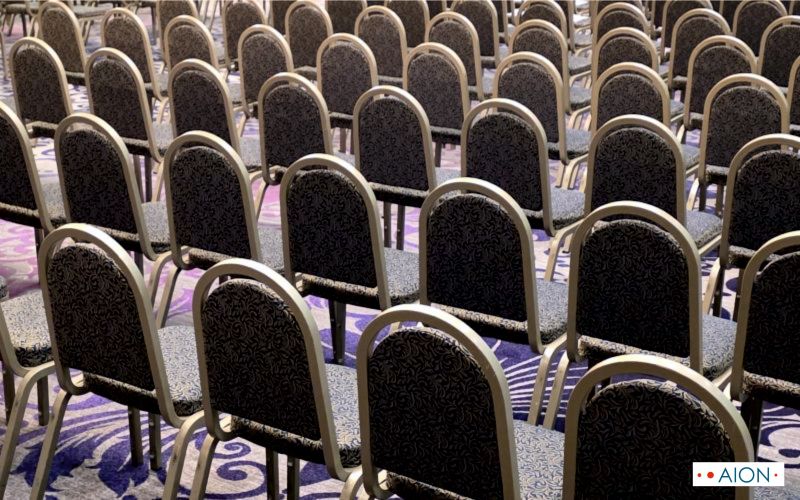
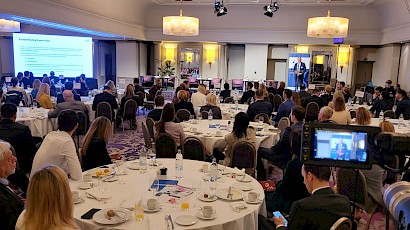
Cinema setup works best for large audiences where most participants are there to listen rather than take notes or actively discuss. Keynote conferences, opening ceremonies, and lecture-style presentations all suit this arrangement well. It also allows the maximum number of people to fit into a given space, since there are no tables taking up floor area.
The trade-off: participants have no surface to write on, which can become a problem if the event runs long or involves detailed materials. And because everyone faces forward, interaction between participants is minimal by design.
School Setup
Add tables in front of those chairs and you have a school setup. Typically two people share one table, though some venues offer longer desks seating three or four. The tables are almost always covered with felt and tablecloths — legs included — so the overall effect is one long, continuous surface running through the room.
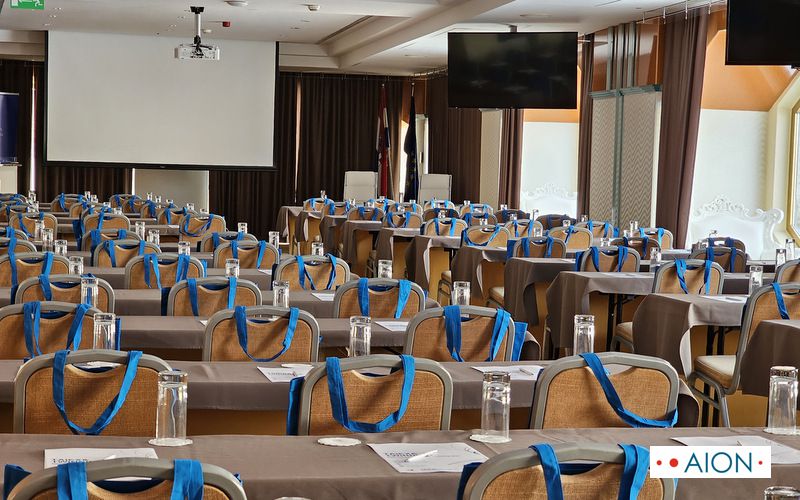
School setup is the go-to choice for working conferences where participants need to take notes, refer to printed materials, or have their laptops open. It signals a longer, more substantive session. It also makes it much easier to distribute materials, set up name placards, and give each participant a proper workspace.
Because participants sit in rows, the setup still has a clear 'front' and a clear audience dynamic — but with more comfort and practicality than cinema seating.
Round Table
Despite the name, a round table is rarely actually round. It is usually oval or rectangular. What the term describes is not the shape of the furniture but the nature of the meeting.
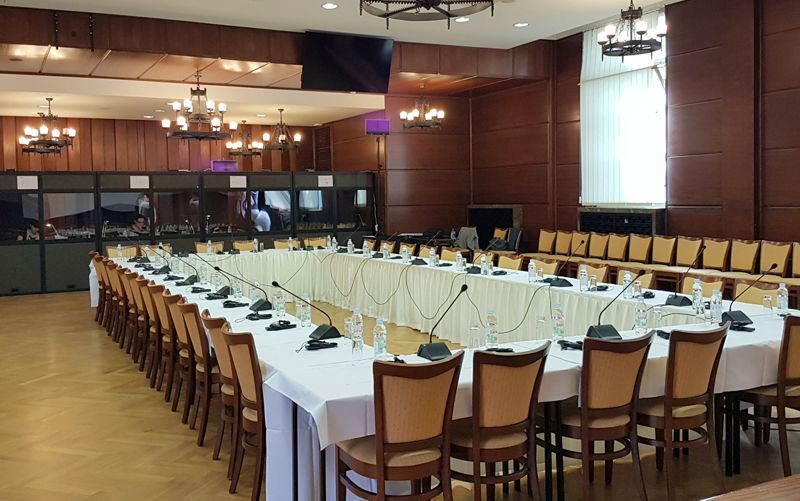
A round table format means all participants have equal status. There is no obvious 'audience' and no obvious 'stage.' Everyone sits at the same table, everyone can see everyone else, and the format itself signals that all voices carry the same weight. This is why round table meetings are common in high-level diplomatic and political settings — a ministerial meeting, for instance, where hierarchy would be inappropriate to make explicit through seating.
Round tables typically accommodate fewer participants than cinema or school setups. The format does not scale well to large groups, and for good reason: the whole point is direct, visible exchange among peers.
Note that in a round table setup, there is no separate presiding table. The chair of the meeting sits in a prominent position — typically the centre of one of the longer sides — from where all participants have a clear line of sight.
The Presiding Table: What It Is and When You Need One
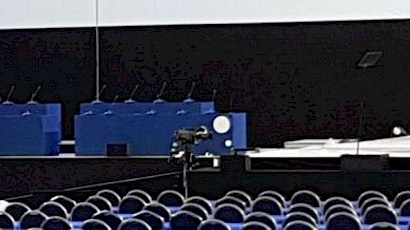
In cinema and school setups, there will almost always be a presiding table at the front of the room. This is where the chair of the meeting sits — the person who runs proceedings throughout the day — and where speakers for each session may also be seated.
If a conference is divided into five sessions with several speakers each, speakers will typically sit at the presiding table during their session, then step up to the lectern when it's their turn to present. Once that session ends, a new group takes their places.
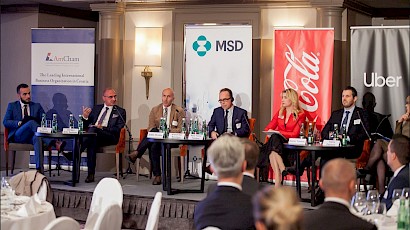
The presiding table may also be accompanied by a panel area — a row of armchairs on stage — for more informal or discussion-based segments. More on that in our article on conference microphones.
► Explore more conference know-how articles:
I need four languages for the conference, but how many interpreting booths?
How Many Interpreters Do I Need for a Conference?
How Conference Interpreters Prepare — and What Clients Can Do to Help