


I need four languages for the conference, but how many interpreting booths?
The Rule of Thumb for Interpreting Booths
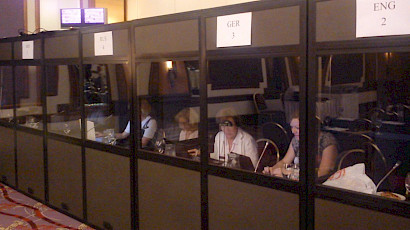
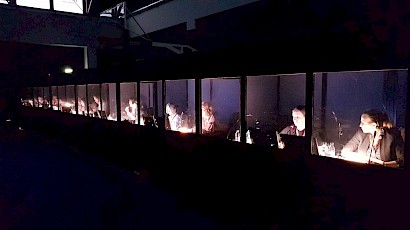
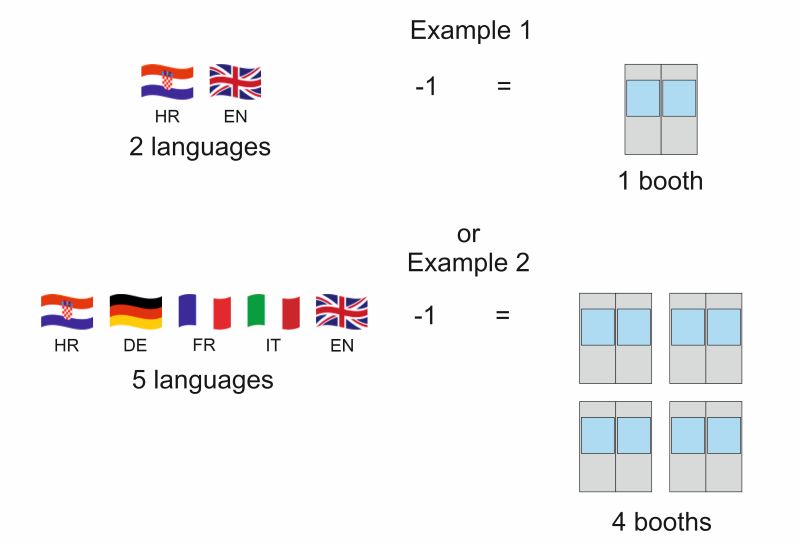
The number of interpreting booths you need equals the number of languages at your conference, minus one.
If your conference runs in two languages — say, English and Croatian — you need one booth. If it runs in five languages — Albanian, Croatian, English, French, and German — you need four booths. Languages minus one.
Why minus one? Because at any given moment, there is always one language being spoken into the room — the floor language — and that language does not need to be interpreted into itself. Interpreters only work from that language into all the others, which is why you need one fewer booth than the total number of languages.
How Headsets Are Counted — and Why
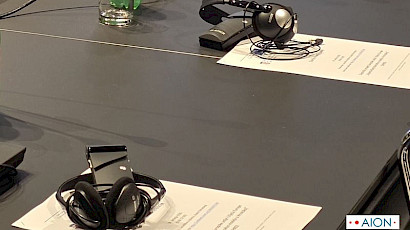
Conference headsets — the devices participants use to listen to interpretation — are supplied and priced in packages of 50. This sometimes surprises clients who assume they'll be charged only for the headsets actually used.
The package-based system exists because the headsets are only one component of a larger technical infrastructure. Each package comes with the infrared or radio-frequency emitters that transmit the audio signal across the conference hall, the full cabling required to connect everything, and the technical equipment for managing and monitoring the entire system.
For a larger conference hall, more emitters must be placed at greater distances, more cabling is required, and setup time increases substantially. The cost reflects the complete system deployed, not simply the count of headsets handed out at the door.
A Note on Booth Quality and Positioning
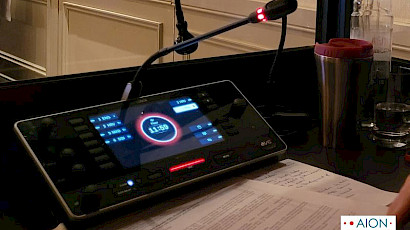
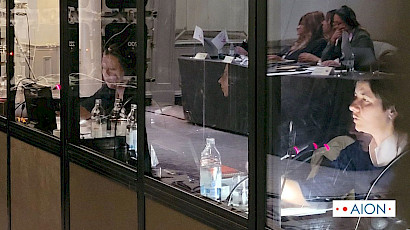
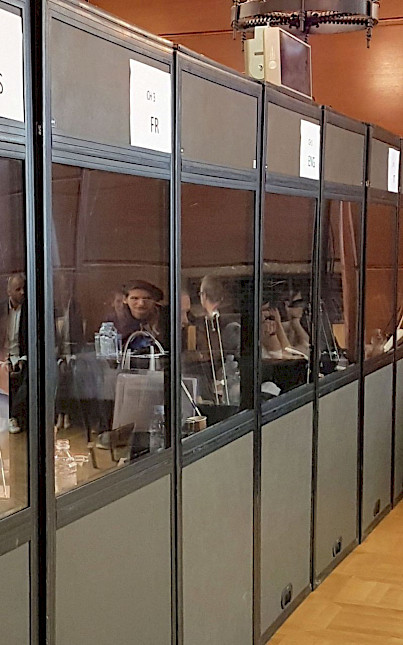
Not all booths are equal. Professional interpreting booths are soundproofed enclosures that allow interpreters to work without their voices bleeding into the conference hall, and without ambient conference noise interfering with their concentration. ISO standards specify minimum dimensions, visibility requirements, and acoustic properties for simultaneous interpreting booths.
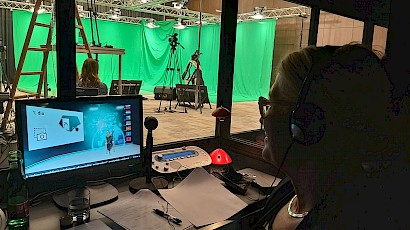
Booth positioning matters too: interpreters need a clear, direct line of sight to the speaker and to any presentation screens. If sight lines are poor, a monitor inside the booth — feeding the speaker's slides or video — becomes necessary.
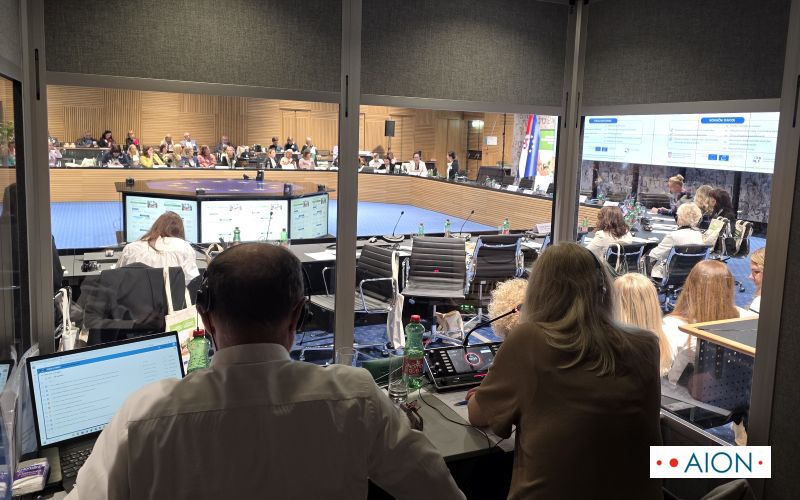
When planning a conference with interpretation, always confirm booth placement early. Moving booths after the hall is set up is costly and disruptive.
One Last Thought: Putting It All Together
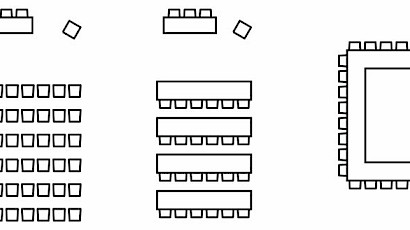
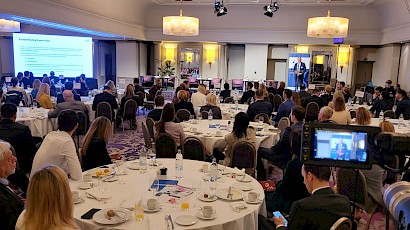
Seating, microphones, and interpreting equipment are not independent decisions. They form a system, and each choice constrains and informs the others. A round table meeting of twelve ministers requires a completely different configuration than a cinema-style conference of three hundred delegates — different booths, different microphones, different headset quantities, different assistant staffing.
The good news is that a professional conference agency will guide you through all of this. But arriving at those conversations with a basic understanding of the terminology and the logic behind each choice puts you in a much stronger position — and tends to produce better results.
► Explore more conference know-how articles:
How Conference Interpreters Prepare — and What Clients Can Do to Help
How Many Interpreters Do I Need for a Conference?
Cinema, School, or Round Table? How Your Seating Choice Shapes the Whole Conference