


Bulls, Bears, and Other Animals in Your Portfolio
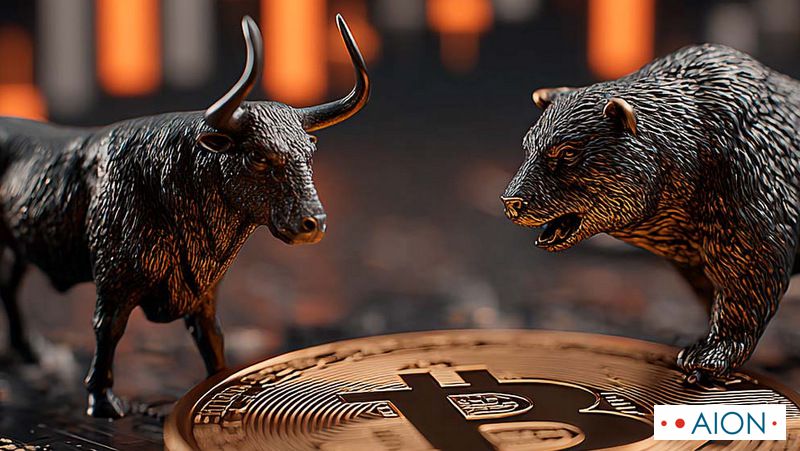
Optimists are called bulls, betting prices will rise. Pessimists are called bears, betting they will fall. The names are older than crypto by a century, borrowed from traditional stock exchanges that never quite agreed on why those two animals won the job. And in there, moving quietly, the whales decide when they're getting in or out — the handful of holders large enough that a single move can tip a market the rest of you are only watching.
You'll need a wallet to hold what you buy, but not a leather one. You will choose between a hot wallet, (software connected directly to the internet for fast trading) or a cold wallet (physical hardware kept offline and deliberately out of reach). They are the crypto equivalents of keeping cash in your front pocket versus locking it deep under a mattress.
When wondering whether to go long or short, remember it’s not about size. Going long means you bet a price will rise; going short means you bet it will fall, allowing you to profit from the drop. Move too fast in a chaotic market, though, and you'll meet slippage — not on ice, but in the frustrating gap between the price you expected and the execution price you actually got. The ground literally shifts mid-transaction.
Move carelessly, or trust the wrong project, and you might experience a rug pull — developers vanishing overnight with investors' funds. The floor is genuinely pulled out from under you, which is exactly the sensation the term was built to describe.
If you’ve joined the social networks, you will see a barrage of codes and abbreviations, as if everyone is talking Klingon. During a market crash, panic-buyers will yell BTFD — Buy the F-in Dip, pardon our French. In a raging bull market, everyone's watching it go to the moon — nothing astronomical at all, just a price rising fast enough to feel like leaving orbit.
And through all of it, one single instruction outlasts every other: HODL. It started as a simple typo for “hold”, misspelled in a frantic 2013 Bitcoin forum post written in the middle of a historic crash. The the internet did what it always does with a good mistake: it kept it, celebrated it, and then invented a meaning worthy of keeping. Today it's read as Hold On for Dear Life.
Nobody planned that. Everyone accepted it anyway. The market didn't invent new feelings; it just borrowed old words fast enough to keep up with them.
Language never stands still, and nowhere does it mutate faster than on the global trading floor. As a translation company dealing with high-stakes corporate localisation, Aion constantly tracks how emerging industries invent, borrow, and mistranslate terms to describe new realities. To navigate modern financial markets, you don't just need a dictionary; you need to understand the living, breathing idioms of the cultural landscape.